
Equipment Introduction :
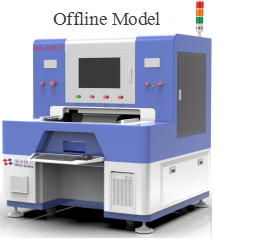
The Ceramic Film Electrode Inspection Equipment is primarily used for the appearance inspection of films after electrode screen printing in the latter stage of the casting process. In the MLCC production process, electrodes are printed after film casting, and the integrity of the electrode pattern is an important quality indicator. This equipment uses a high-definition camera, light source, and lens to capture images after electrode printing. It then utilizes traditional or AI deep learning-based software processing on the captured images to identify product electrode defects (including white spots, black spots, jagged edges, white patches, burrs, bleeding, incomplete printing, deformation, etc.) and locate the defect positions.
Application Expansion :
PC Film Defect Detection and Positioning
PET Film Defect Detection and Positioning
PVB Film Defect Detection and Positioning
Optical Film Defect Detection and Positioning
|
Inspection Content |
Product electrode defects (white spots, black spots, jagged edges, white patches, burrs, bleeding, incomplete printing, deformation) |
|
Camera Resolution |
16384*3 |
|
System Single-Pixel Accuracy |
0.008mm |
|
Equipment Inspection Efficiency |
≤12 seconds/sheet |
|
Power Supply Voltage |
AC220V 50HZ |
|
Compatible Product Specifications |
330*330 (mm) (Standard model, other non-standard models can be customized) |
|
Inspection Method |
Online sampling (line scan) / Offline standalone |
|
Operating Temperature |
0-50℃ |
|
Environmental Requirements |
Dust-free, 40%-70% humidity |

